Pag-IBIG Affordable Housing Loan and Expanded 4PH
Pag-IBIG’s affordable housing options can help qualified minimum-wage and low-income members buy socialized housing at a subsidized interest rate. Eligibility depends on the borrower, the property, current income limits, contribution records, and the specific 4PH project.
Quick answer
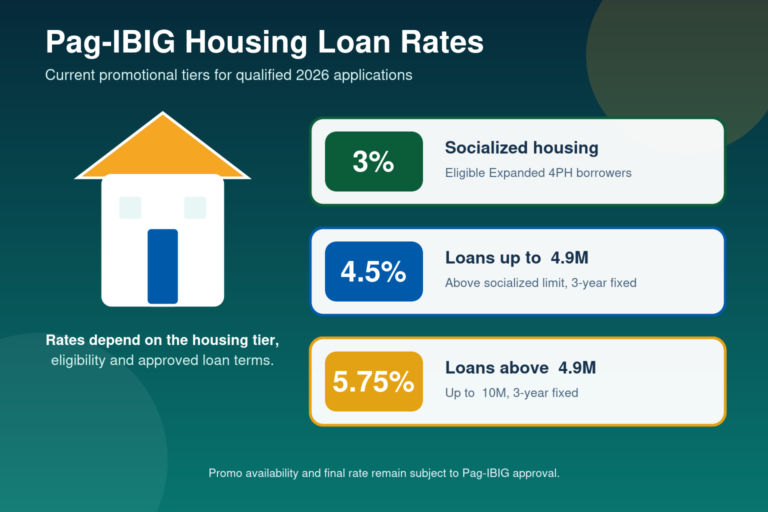
The Pag-IBIG Affordable Housing Loan is not simply any low-priced home financed through Pag-IBIG. In 2026, the strongest affordable-housing benefit is tied to qualified socialized housing borrowers under the Expanded Pambansang Pabahay para sa Pilipino Program, commonly called Expanded 4PH. Qualified borrowers may receive a subsidized 3% annual rate, while the home and applicant must satisfy the program’s current conditions.
Government reports identify first-time homeownership, low-income or minimum-wage status, sufficient Pag-IBIG contributions, and a qualifying socialized housing unit as central conditions. The final decision still belongs to Pag-IBIG Fund and the participating housing agencies.
What “affordable housing” means under Pag-IBIG
Affordable housing is a broad phrase, but Pag-IBIG and government housing programs use more specific categories. Socialized housing is intended for lower-income households and is subject to regulated price ceilings. Economic, low-cost, and open-market homes may also be financed through Pag-IBIG, but they do not automatically receive the same subsidy.
Socialized housing
Homes within the current socialized housing price ceilings may qualify for the subsidized 3% rate when both borrower and project conditions are met.
Expanded 4PH
The national program now covers qualifying vertical projects, horizontal subdivisions, and selected rental housing initiatives.
Regular housing loan
Members who do not qualify for the subsidy may still apply for regular Pag-IBIG financing at the applicable approved rate.

Who may qualify for the subsidized affordable housing rate?
Current government explanations consistently place the benefit around minimum-wage and low-income members who are buying their first home. A member should not assume eligibility from salary alone because Pag-IBIG also reviews the property, contribution record, capacity to pay, existing housing ownership, and the project’s status.
| Condition | What it generally means | What to verify |
|---|---|---|
| First-time homeowner | The applicant should not already own a residential property under the subsidized route. | Property declarations and official eligibility rules. |
| Low-income or minimum-wage status | Income must fall within the applicable program threshold for the location and beneficiary group. | Current regional ceiling, because figures may change. |
| Pag-IBIG membership | Government briefings have cited at least 12 monthly contributions for 4PH applicants. | Your posted savings and the current official checklist. |
| Qualifying property | The unit must be residential and part of a project that satisfies socialized housing and program rules. | Developer license, project accreditation, price and classification. |
| Capacity to pay | The monthly amortization must remain supportable after other debts and household expenses. | Income documents, co-borrower structure and final Pag-IBIG assessment. |
Current socialized housing price ceilings
Government reports in 2026 describe loanable amounts of up to ₱950,000 for horizontal socialized housing and up to ₱1.8 million for vertical developments. Horizontal housing generally refers to house-and-lot or subdivision projects, while vertical housing usually refers to condominium or multi-storey residential projects.
The ceiling is not a guaranteed loan amount. The approved amount may be lower because Pag-IBIG considers the contract price, appraised value, borrower capacity, loan-to-value rules, and other underwriting conditions.

How the 3% subsidized rate works
The 3% annual rate is a subsidized benefit for eligible socialized housing borrowers under Expanded 4PH. It is not the regular rate for every Pag-IBIG borrower and not every property advertised as affordable qualifies. Current briefings say the subsidy may apply for an initial period, commonly reported as five years, while selected early qualified borrowers may receive a longer promotional period.
Before signing a reservation agreement, ask for written confirmation of the applicable rate, fixed period, projected payment after the subsidy period, and all charges. The separate Pag-IBIG housing loan interest rate article explains current rate tiers and repricing in more detail.
Affordable housing monthly payment estimator
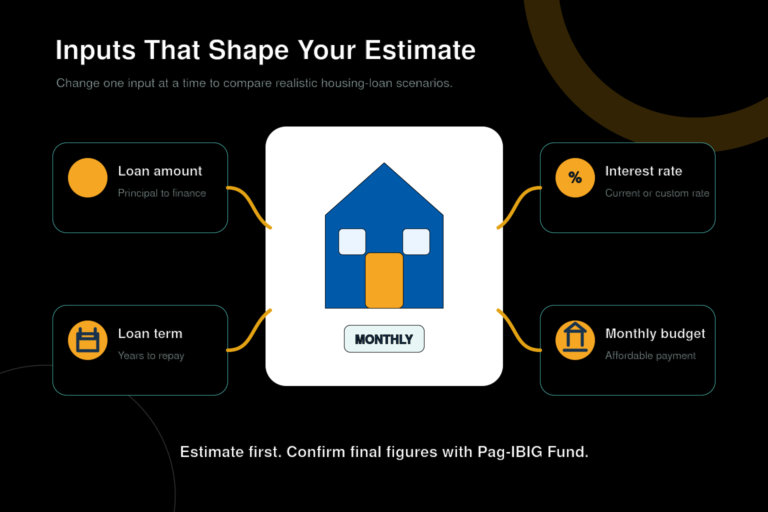
This calculator estimates principal and interest only. It does not include insurance, fees, association dues, taxes, or a future change after a subsidized or fixed period.
For more scenarios, reverse affordability calculations, and budgeting notes, use the full Pag-IBIG housing loan calculator.
Requirements to prepare
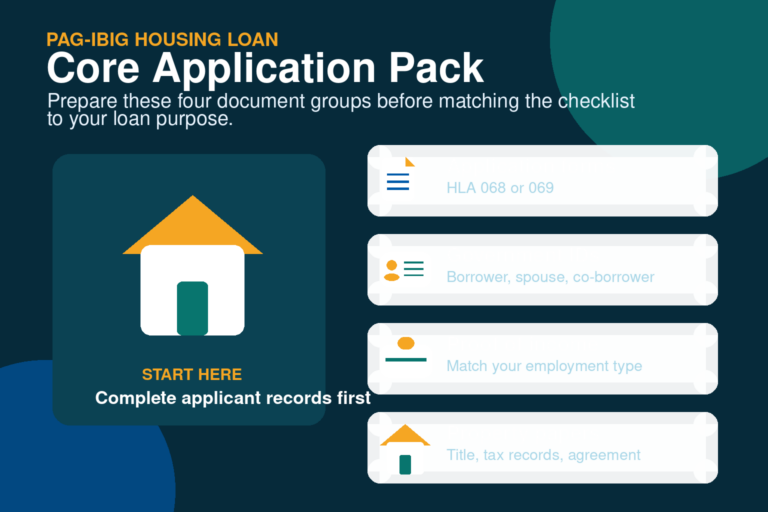
The exact checklist depends on the developer, property type, application channel, and borrower profile. Affordable housing applicants still go through a housing-loan evaluation, so the basic package normally includes membership, income, identity, civil-status, and property records.
Member documents
- Correct housing loan application form
- Valid government-issued identification
- Pag-IBIG MID and membership records
- Marriage or civil-status documents when applicable
Income evidence
- Employment and compensation records
- Payslips or tax records when requested
- Business and financial records for self-employed applicants
- Separate proof for a co-borrower
Property records
- Developer and project documents
- Reservation or purchase records
- Property title or project-specific documents
- Current price and unit classification
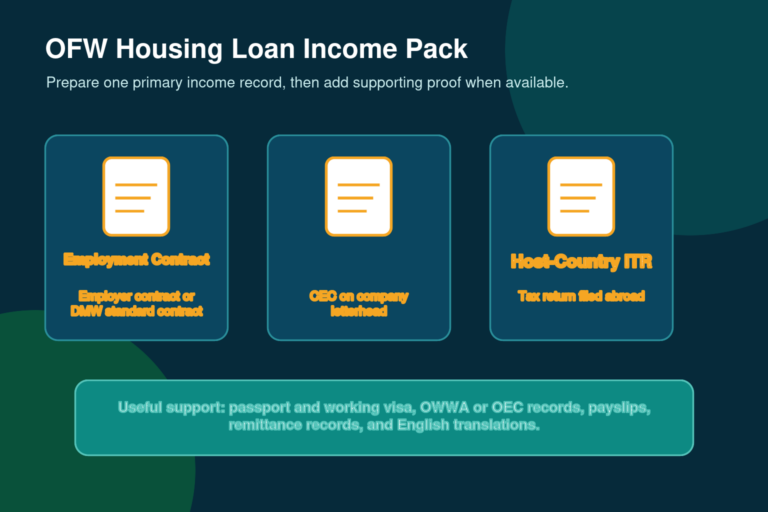
The complete general checklist is covered in the Pag-IBIG housing loan requirements article. OFWs should also review the separate housing loan requirements for OFWs.
How to apply for an affordable housing loan
Identify a qualifying project
Check official housing fairs, DHSUD or Pag-IBIG announcements, participating developers, and local government housing offices. Confirm that the exact unit is classified under the relevant socialized or 4PH program.
Check borrower eligibility
Review your homeownership status, income bracket, Pag-IBIG contributions, age, existing loans, and capacity to pay. Ask for the current local income ceiling.
Compare the complete cost
Review the selling price, equity or down payment, reservation fee, monthly amortization, insurance, association dues, utilities, and transport cost.
Prepare and submit the application
Complete the required forms and attach the borrower, income, and property documents. The online housing loan application steps explain the member submission service.
Wait for formal evaluation
Pag-IBIG evaluates the borrower and property. Do not treat a developer’s pre-screening or calculator result as final approval.

Affordable housing in Bulacan, Cavite, Laguna, Rizal and Quezon City
Location searches usually mean the user is looking for an available project rather than a different loan program. The financing rules are generally national, but available developments, income ceilings, unit prices, project partners, and submission arrangements can differ by region.
For Montalban or Tanay in Rizal, Camarin or other parts of Quezon City, and projects in Bulacan, Cavite or Laguna, verify the project through Pag-IBIG, DHSUD, the local government, or a licensed developer. Never send a reservation payment only because a social media post uses the words 4PH, affordable, or Pag-IBIG accredited.
Common mistakes that make an “affordable” home expensive
Looking only at amortization
Add equity, fees, insurance, association dues, transport, repairs, and utility connection costs.
Assuming 3% lasts forever
Confirm the subsidy or fixed period and request a projection for the payment after that period.
Paying before verification
Confirm the project, developer authority, official receipt, refund rules, and unit details before paying.
A safe monthly payment leaves room for food, utilities, education, transportation, emergencies, and savings. Approval capacity and household affordability are not always the same.
Frequently asked questions
What is the Pag-IBIG Affordable Housing Loan?
It is housing financing intended to make socialized housing more accessible to qualified low-income and minimum-wage members. Under Expanded 4PH, eligible borrowers may receive a subsidized 3% annual rate.
Is the Affordable Housing Loan the same as Expanded 4PH?
They are closely related but not identical terms. Affordable housing can describe several Pag-IBIG financing options, while Expanded 4PH is a specific government housing framework with project and beneficiary rules.
Who can qualify for the 3% rate?
Current reports prioritize qualified minimum-wage and low-income first-time homeowners buying an eligible socialized housing unit. Pag-IBIG confirms final eligibility.
How many Pag-IBIG contributions are required?
Government briefings in 2026 cited at least 12 monthly contributions for 4PH applicants. Confirm the current official requirement and ensure the contributions are posted.
Can I qualify if I already own a house?
The subsidized route prioritizes first-time homeowners who do not own registered residential property. Members outside that condition may still qualify for regular financing or a 4PH project at a non-subsidized rate.
What is the price ceiling for a house and lot?
Current 2026 government reports cite up to ₱950,000 for horizontal socialized housing projects.
What is the price ceiling for a condominium?
Current 2026 reports cite up to ₱1.8 million for vertical socialized housing developments.
Is the 3% rate permanent?
No. It is a subsidized or promotional benefit with conditions and a stated period. Confirm the exact fixed or subsidy period in the final loan documents.
How much is the monthly payment for ₱950,000?
At 3% over 30 years, estimated principal and interest is about ₱4,005 per month. Actual billing may include insurance and other charges.
How much is the monthly payment for ₱1.8 million?
At 3% over 30 years, estimated principal and interest is about ₱7,589 per month, excluding insurance, fees and future rate changes.
Can an OFW apply under Expanded 4PH?
Government announcements in 2026 expanded opportunities for OFWs. The member must still meet the current borrower and property requirements, with OFW-specific income and overseas document rules.
Can I use the program for home improvement?
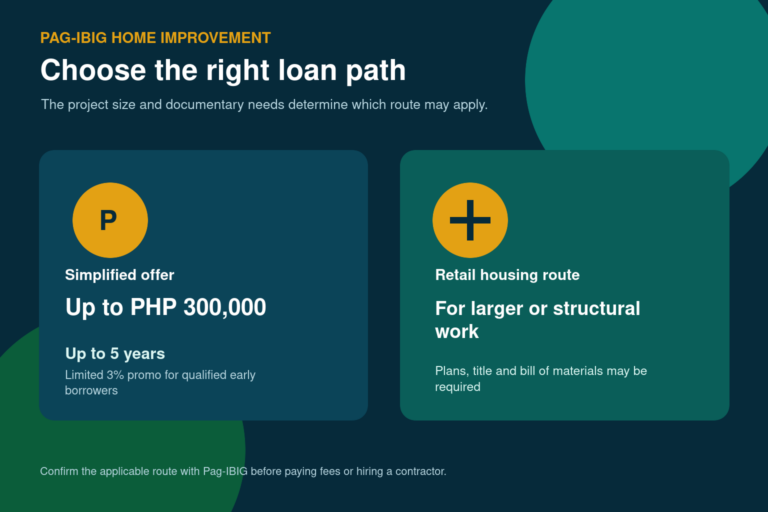
The affordable homeownership route mainly concerns acquiring qualifying housing. Repair or renovation financing is covered separately by the Pag-IBIG Home Improvement Loan and regular housing-loan routes.
Are single-detached homes allowed?
Expanded 4PH now includes qualifying horizontal developments, which may include house-and-lot configurations. The exact unit and project must satisfy the current price, licensing and program rules.
Where can I find affordable projects in my province?
Check official Pag-IBIG housing fairs, DHSUD announcements, local government housing offices and participating licensed developers. Availability changes by location.
Does a developer approval mean Pag-IBIG approval?
No. Developer pre-screening is not the final Pag-IBIG loan decision. Pag-IBIG still evaluates the borrower, documents, property and requested amount.
Can I apply online?
Pag-IBIG provides an online member housing-loan submission service for eligible applications, but project selection and developer processing may involve additional steps.
How do I know whether I can afford the loan?
Estimate the payment, add all ownership costs, subtract existing debts and maintain an emergency buffer. Use a conservative budget rather than the highest amount a lender might approve.
Where should I verify the latest rules?
Use official Pag-IBIG Fund, Virtual Pag-IBIG, DHSUD, PIA and Philippine government announcements. Account-specific eligibility should be confirmed directly with Pag-IBIG.
Related Pag-IBIG resources
Official and accessible sources
Use the official Pag-IBIG Fund website as the primary route for current program instructions. For dated 2026 announcements that load reliably, review the GMA News reports on the 3% socialized-housing rate and the ₱10 million housing-loan ceiling.
Source access note: Some government housing and news websites reject automated previews even when their pages remain available to normal browsers. This source set was reviewed on July 31, 2026.
Independent information notice
This website is an independent informational resource and is not Pag-IBIG Fund, DHSUD, or a Philippine government website. Program rules, income ceilings, project availability, prices, rates and documentary requirements may change. Confirm account-specific and project-specific information directly with Pag-IBIG Fund and the relevant housing agency before paying or signing any agreement.