Independent Pag-IBIG information
Pag-IBIG Home Improvement Loan 2026
Check the current amount, limited 3% promotional rate, requirements, monthly payment estimate and application steps for repairing or renovating an existing home.
Quick answer
The 2026 Pag-IBIG Home Improvement Loan is a simplified financing option promoted for repairs and renovation of an existing residential property. Government announcements describe a maximum amount of ₱300,000, a repayment period of up to five years, and an initial 3% annual promotional rate for a limited group of qualified borrowers.
That simplified product should not be confused with the regular Pag-IBIG retail housing-loan route for house construction or larger home-improvement work. The regular route can require a title, plans, permits, specifications and a signed bill of materials. Confirm which route applies to the proposed work before preparing the final document pack.
What the Pag-IBIG home improvement loan is for
The loan is intended for work on a home that already exists. It may be searched as a Pag-IBIG renovation loan, house renovation loan or home repair loan, but the practical intent is the same: financing work that restores, improves or makes an existing residence safer and more usable.
Smaller improvement projects
- Roof, ceiling, gutter or weather-damage repair
- Plumbing, drainage or electrical corrections
- Replacement of damaged doors and windows
- Kitchen or bathroom improvement
- Safety, accessibility and basic livability work
Larger or structural work
- Major additions or an extension to the building
- Projects requiring structural plans and permits
- Work with a cost above the simplified loan ceiling
- Projects that materially change the building layout
- Combined construction and renovation scopes

Pag-IBIG home improvement loan calculator
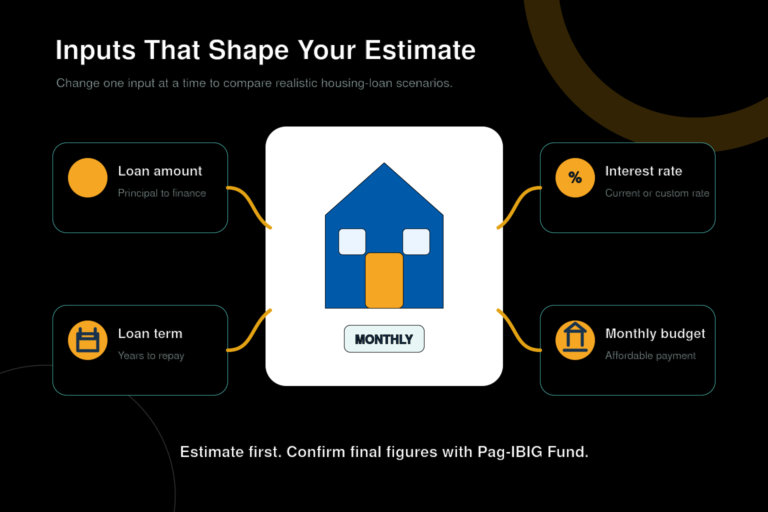
Use this estimator for the promoted simplified product. It applies the standard amortization formula to the amount, annual rate and term entered below. It does not represent a Pag-IBIG approval, official quotation or final billing statement.
The estimate excludes any insurance, taxes, appraisal costs, documentary charges, penalties or other amounts that may apply. The official disclosure and loan documents control.
| Illustrative amount | Term | Annual rate used | Estimated monthly payment |
|---|---|---|---|
| ₱100,000 | 5 years | 3% | About ₱1,796.87 |
| ₱200,000 | 5 years | 3% | About ₱3,593.74 |
| ₱300,000 | 5 years | 3% | About ₱5,390.61 |
Loan amount, term and the limited 3% rate
The simplified product announced in 2026 has a reported maximum loanable amount of ₱300,000 and a maximum term of five years. A borrower does not automatically receive the maximum. Pag-IBIG can base the approved amount on capacity to pay, submitted income evidence, the project and its validation rules.
The initial 3% rate should be treated as a promotion, not a permanent universal rate. Government reports described it as available to the first 10,000 qualified borrowers. Because a limited offer can become unavailable, applicants should ask Pag-IBIG to confirm the rate in force on the application or approval date.
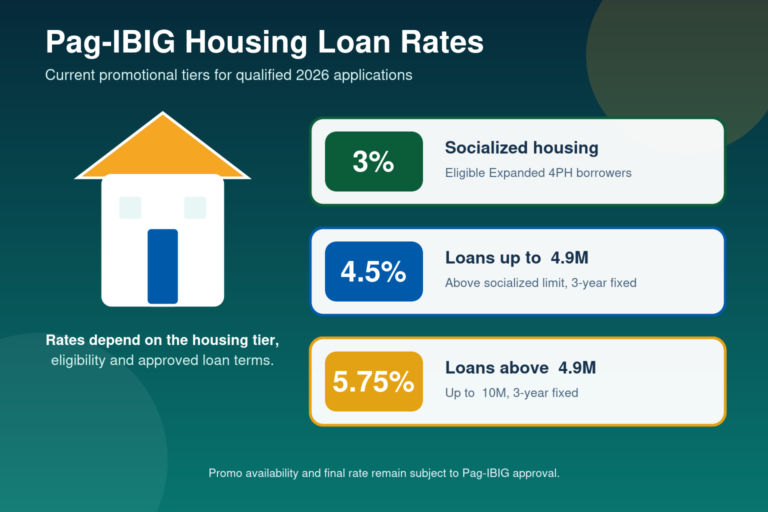
For a larger project routed through the regular retail housing-loan program, the applicable interest rate, fixed period and repricing terms can differ. The separate Pag-IBIG housing loan interest rate page explains those rate concepts without mixing them into this renovation-specific application.
Pag-IBIG home improvement loan requirements
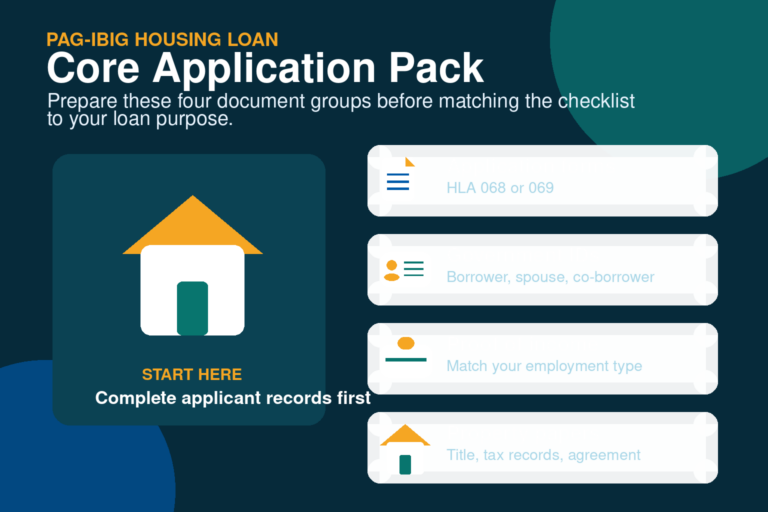
The document pack depends on whether the application uses the simplified 2026 product or the regular retail housing route. Start with the simplified checklist below, then confirm whether Pag-IBIG needs the more detailed construction and property papers.
Simplified 2026 document set
- Accomplished home improvement loan application form
- Photocopy of an accepted valid identification card
- Proof of income that matches the applicant’s work status
- Two colored photographs showing the exterior of the house
- Updated real property tax receipt
- Vicinity map or clear sketch showing the property location
- Signed Deed of Negative Pledge with Promissory Note
Prepare for validation
- Keep originals available for authentication
- Make names and addresses consistent across records
- Use current and readable income documents
- Show the correct house in both exterior photographs
- Do not begin based only on an expected approval
- Ask which submission channel and form version apply

Requirements for employed and self-employed applicants
Employed applicant
Use recent evidence that allows Pag-IBIG to confirm employment and compensation. The current official checklist may request an employment and compensation certificate, payslips, tax records or another acceptable employer-issued record, depending on the route and the applicant’s circumstances.
Make sure the employer name, applicant name and compensation details agree across the documents. A recent change in employer, variable pay or a large difference between declared and documented income can lead to an additional request.
Self-employed applicant
Prepare business and tax evidence that demonstrates continuing income. Depending on the business form and loan route, Pag-IBIG may look for registration, tax returns, financial statements, bank activity, contracts or other records that show the source and stability of earnings.
Do not rely on a single unsupported income figure. Organize records by period and use the same business name, taxpayer information and address throughout the application.
For a complete applicant-by-applicant breakdown, use the Pag-IBIG housing loan requirements checklist. Pag-IBIG may request additional proof when the initial set does not fully establish identity, income, ownership or authority to improve the property.
When the retail house-construction and home-improvement checklist applies
The official retail checklist identified as HLF731 covers house construction and home improvement under the regular housing-loan process. This route is more document-heavy because Pag-IBIG may need to evaluate title records, the property, the technical scope and the proposed construction cost.
Applicant and ownership records
- Housing Loan Application HLF068
- Co-borrower application HLF069, when applicable
- Two acceptable valid IDs under the checklist
- Latest title or certified title copy
- Updated tax declaration and real property tax receipt
- Vicinity map or property-location sketch
Technical project records
- Building, electrical and sanitary plans where required
- Applicable building permits
- Project specifications
- Detailed bill of materials and cost estimates
- Required signatures and professional seals of a licensed civil engineer or architect
- Additional property or appraisal records requested after review
How to apply for a Pag-IBIG home improvement loan
The safest process begins by confirming the correct product and current filing channel. The 2026 launch announcements directed applicants to Pag-IBIG branches, while the regular Housing Loan Application package also has an online member submission path. Availability can change by product and stage.
Define the project
List the repair work, expected materials, estimated cost and whether permits or structural plans may be needed.
Confirm the route
Ask whether the simplified Home Improvement Loan or the regular retail HCHI process fits the scope and amount.
Submit and validate
File the current form and document pack through the channel Pag-IBIG identifies, then complete identity and property checks.
Review the decision
Read the approved amount, rate, term, repayment method and release conditions before signing or starting work.

Can the home improvement loan be applied for online?
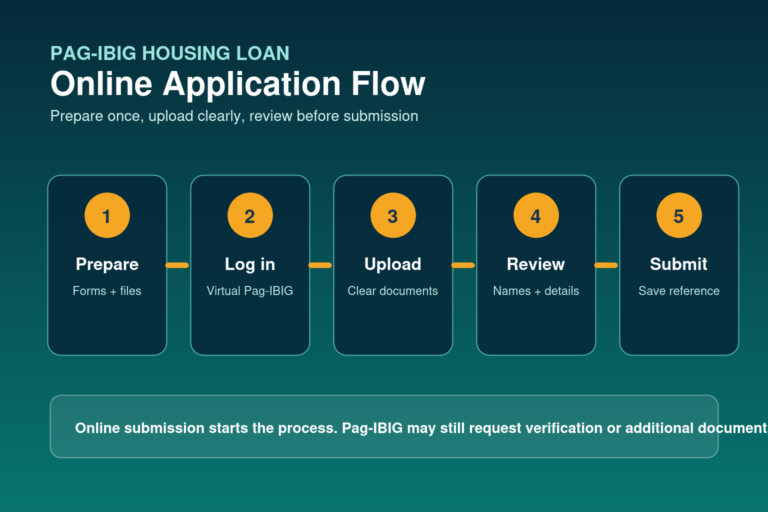
The answer depends on the product and the current service channel. Pag-IBIG’s regular online Housing Loan Application service allows members to prepare and submit an initial housing-loan package through Virtual Pag-IBIG. That service asks for the appropriate application form, proof of income, a valid ID and a selfie holding the ID.
The launch information for the simplified 2026 Home Improvement Loan said forms were available at Pag-IBIG branches nationwide. It did not establish that every stage of that specific simplified product could be completed online. Contact Pag-IBIG or check the official product page before uploading personal files to any website.
The separate housing loan online application page explains the official member submission process and upload rules. Use it only after Pag-IBIG confirms that the selected product and application stage are supported online.
Pag-IBIG renovation loan versus a bank home improvement loan
| Comparison point | Pag-IBIG simplified offer | Regular Pag-IBIG retail route | Bank product |
|---|---|---|---|
| Typical scope | Smaller repair or renovation needs within the promoted ceiling | Larger, structural or technically documented work | Varies by lender and secured or unsecured structure |
| Reported amount | Up to ₱300,000 | Based on the housing-loan program, appraisal and capacity to pay | Depends on the bank’s product and underwriting |
| Term | Up to five years in the launch announcement | Depends on approved housing-loan terms | Depends on lender and product type |
| Property documents | Simplified property evidence is reported | Title, tax and technical construction records may apply | May be lighter for unsecured credit or extensive for secured financing |
| Rate comparison | Limited 3% promotion, subject to availability and qualification | Housing-loan rate and repricing rules apply | Compare the effective rate, fees, insurance and variable-rate risk |
Do not compare products by the advertised interest rate alone. Review the effective cost, fees, collateral, payment term, early-payment rules and the consequences of late payment. A bank offer can change quickly, so obtain a current written quotation rather than relying on an old online rate.
Common reasons an application is delayed
Document problems
- Unclear exterior photographs or incorrect property shown
- Expired, unreadable or inconsistent identity records
- Old tax receipt or incomplete property-location sketch
- Income documents that do not support the declared figure
- Missing signatures on the application or loan documents
- Using an old form without checking the current version
Project and eligibility problems
- Requested amount is not supported by capacity to pay
- Project is larger than the simplified route can accommodate
- Structural work lacks required plans, permits or professional seals
- Ownership or authority to improve the property is unclear
- Borrower starts work before understanding release conditions
- Promotional rate is assumed without written confirmation
Frequently asked questions
What is the Pag-IBIG Home Improvement Loan?
It is financing for repair or renovation of an existing residential property. In 2026, Pag-IBIG promoted a simplified product with a maximum amount of ₱300,000, a term of up to five years and a limited initial 3% rate for qualified borrowers.
How much can I borrow for home improvement?
The simplified 2026 product is reported with a maximum of ₱300,000. The approved amount can be lower based on income, capacity to pay, validation and the project. Larger work may be assessed through the regular retail housing-loan route.
Is the Pag-IBIG home improvement loan interest rate always 3%?
No. The 3% rate is a limited promotional rate, not a permanent rate guaranteed to every applicant. Confirm the current rate and its conditions directly with Pag-IBIG before relying on a payment estimate.
Who can receive the limited 3% promotional rate?
Government reports described the promotion as intended for the first 10,000 qualified borrowers. Qualification, availability and the rate stated in the final loan documents control.
What is the maximum repayment term?
The simplified product was announced with a maximum term of five years. The approved term can depend on Pag-IBIG assessment and may differ for a project handled under the regular retail housing-loan program.
How much is the estimated monthly payment for ₱300,000?
At 3% annual interest over 60 months, the standard amortization formula gives an estimate of about ₱5,390.61 per month. This is an illustration and excludes other charges or a different approved rate.
What are the basic home improvement loan requirements?
The simplified list includes an application form, valid ID copy, proof of income, two colored exterior house photographs, updated real property tax receipt, vicinity map or sketch, and a signed Deed of Negative Pledge with Promissory Note.
What does an employed applicant need?
An employed applicant should prepare current evidence of employment and compensation that meets the official checklist. Pag-IBIG may ask for an employment certificate, payslips, tax records or additional proof depending on the application.
What does a self-employed applicant need?
A self-employed applicant should prepare current business, tax and financial records that show the source and continuity of income. The exact set depends on the business form and the loan route.
Do I need a land title?
The simplified product announcement emphasizes exterior photos, a tax receipt and a vicinity map rather than the full title package. The regular retail HCHI checklist does require title and other property records. Pag-IBIG should confirm which route applies.
Can I apply for the home improvement loan online?
The regular Housing Loan Application has an online member submission service. The simplified 2026 product was announced through Pag-IBIG branches. Confirm whether the selected product and application stage are currently supported online.
Where can I get the application form?
Use the official Pag-IBIG Home Improvement Loan page, a Pag-IBIG branch or the official downloadable forms section. Check the form title and version before signing it.
Can I use the loan for home repairs?
Repair and renovation of an existing home are the central purposes of the product. The work still needs to fit Pag-IBIG rules and the approved project scope.
Can I use it for an extension or structural renovation?
A major extension or structural project may require the regular retail house-construction and home-improvement route, including plans, permits, specifications and a bill of materials. Confirm the route before preparing documents.
What is the difference between the simplified and retail home-improvement routes?
The simplified product has a promoted ceiling of ₱300,000 and a shorter checklist. The retail route is designed for more extensively evaluated housing work and can require title, tax, technical and appraisal documents.
Should I use 2024 or 2025 requirements?
Use the current 2026 product page and latest official checklist instead of an old snapshot. Requirements, rates, forms and submission channels can change.
How long does approval take?
There is no universal processing time that applies to every application. Completeness, income validation, property checks, project complexity and requests for additional documents can affect the timeline.
Is a Pag-IBIG loan better than a bank renovation loan?
That depends on the current effective rate, fees, term, collateral, documentary burden and the amount needed. Obtain current written terms from each lender and compare total cost, not only the advertised rate.
Related Pag-IBIG resources
Independent information notice
This website is an independent informational resource and is not Pag-IBIG Fund or a Philippine government website. Loan availability, promotional rates, eligibility, forms, documentary requirements and submission channels can change. Confirm the current terms with Pag-IBIG Fund before signing a contractor agreement, paying a fee or starting renovation work.