Pag-IBIG Housing Loan Requirements
Prepare the correct applicant, income and property documents for a house-and-lot purchase, developer purchase, construction, home improvement or refinancing application.
Quick answer
The standard Pag-IBIG housing loan package has four parts: the correct Housing Loan Application form, valid government-issued identification, proof of income, and property documents. The exact list changes according to whether you are buying from a private seller or developer, building, improving a home, or refinancing an existing loan.
Do not rely on one generic checklist for every transaction. Start with the applicant documents, then add the income and property records required for your specific loan purpose.
Pag-IBIG Housing Loan Requirements at a Glance
Use this as an organizing map, not as a substitute for the purpose-specific Pag-IBIG checklist. A document may be required from the borrower, spouse, co-borrower, seller, developer or authorized representative depending on the transaction.
Application and identity
- Housing Loan Application HLF068 for the principal borrower
- Co-Borrower Housing Loan Application HLF069 when applicable
- Recent applicant photo when required by the current checklist
- Valid Philippine government-issued IDs with signatures
- Civil-status and discrepancy documents when records do not match
Income and employment
- Certificate of employment and compensation for many salaried applicants
- Recent certified payslip and income tax records
- Business, tax and financial records for self-employed applicants
- Contracts, remittance or overseas employment records for OFWs
- Extra evidence when the first set does not fully establish income
Property and transaction
- Latest title and updated tax declaration
- Real property tax receipt, tax clearance or equivalent record
- Contract to sell, deed-related paper or developer document
- Vicinity map and technical records when required
- Plans, permits and cost estimates for construction or improvement
Additional records
- Spouse and co-borrower documents
- Seller or developer IDs and records
- Special power of attorney for an authorized representative
- Existing housing-account disclosure when applicable
- Documents requested to resolve names, signatures, boundaries or ownership issues

Applicant Documents You Should Prepare First
The applicant pack is the most reusable part of the requirements. Complete it carefully because incomplete fields, mismatched names and unclear copies can slow down the review even when the property papers are complete.
| Document | Who uses it | Preparation note |
|---|---|---|
| HLF068 Housing Loan Application | Principal borrower | Use the latest version and complete every applicable field. Do not leave required declarations unsigned. |
| HLF069 Housing Loan Application for Co-Borrower | Each co-borrower | Income, identity, civil-status and signature details should agree with supporting records. |
| Valid government-issued ID | Borrower, spouse, co-borrower, seller and representative as applicable | The retail-purchase checklist calls for a signature-bearing Philippine government ID and a back-to-back photocopy. Present originals when authentication is required. |
| Applicant photo | Borrower and co-borrower when specified | Follow the current checklist for size, recency and number of copies. The retail checklist says not to use a computer-generated or photocopied photo. |
| Civil-status records | Borrower, spouse or seller as applicable | Marriage, birth, annulment, death or similar records may be requested to establish consent, relationship or ownership. |
| Discrepancy documents | Any party with inconsistent records | Prepare supporting records when names, birth dates, signatures or civil status do not match across forms and IDs. |
| Authorization documents | Applicant using a representative | A special power of attorney and representative information or investigation authorization may be required. |
Before you fill in HLF068 or HLF069
- Confirm your Pag-IBIG MID number and personal details.
- Use the same legal name shown on your IDs and civil records.
- List existing loans and financial obligations accurately.
- Use an active mobile number and email address.
- Confirm the exact property address and loan purpose.
- Ask a co-borrower to prepare a separate income pack.
Members who still need to confirm their number can review the Pag-IBIG MID number steps. Keeping your member details consistent also reduces the chance that the application and contribution records will need manual reconciliation.
Proof of Income Requirements
Pag-IBIG needs documents that show a stable, verifiable source of repayment. The correct set depends on how you earn, and the Fund may request additional evidence when the initial records are incomplete or inconsistent.
Locally employed
A salaried applicant commonly prepares a certificate of employment and compensation, a recent certified payslip, and the latest income tax return or BIR Form 2316. The certificate should contain the compensation information requested by the applicable checklist.
- Certificate of employment and compensation
- Certified recent payslip
- Latest ITR or BIR Form 2316
- Employer verification or salary deduction forms when applicable
Self-employed or freelancer
Self-employed applicants should build a record trail that connects the business or professional activity to declared income. One document is rarely enough when income comes from several clients or sources.
- Latest income tax return and BIR registration records
- Audited financial statements when applicable
- Business permits and DTI or SEC records
- Bank statements, commission records or service contracts
- Lease, franchise, engagement or professional-fee records when relevant
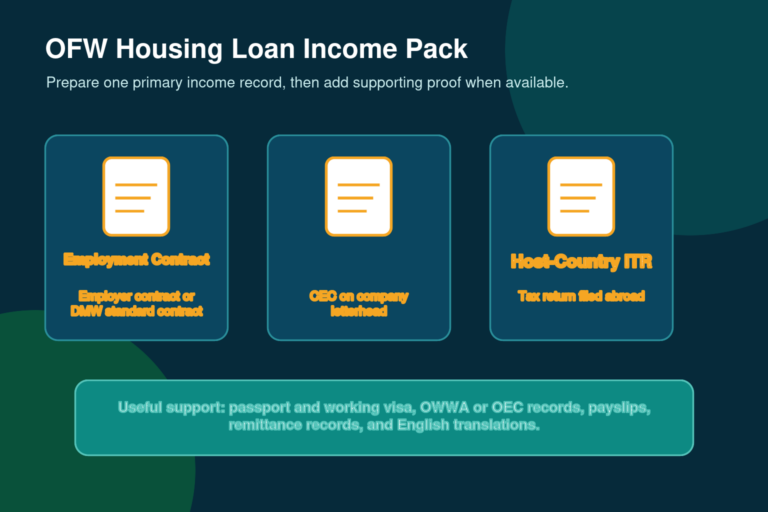
OFW or overseas income
An overseas applicant may need an employment contract or employer certification plus documents showing legal overseas work and actual remittances. Authentication and translation rules can apply.
- Employment contract or certificate of employment and compensation
- Passport, visa, residence or deployment records
- Payslip or remittance evidence when requested
- English translation for documents issued in another language

Why self-employed applications often need more supporting records
A payslip gives Pag-IBIG a straightforward employer-issued snapshot. A business owner, freelancer, commission earner, lessor or professional may have variable income, multiple payers and irregular deposits. Tax records show declared income, while bank, contract and business records help establish where the money comes from and whether it is recurring.
Do not submit a large stack of unrelated documents. Organize records by income source, mark the relevant deposits or contracts, and make sure totals do not contradict the amount written in the application. Clear organization helps the reviewer understand the case without guessing.
Co-Borrower and Spouse Requirements
A co-borrower can strengthen the documented repayment capacity, but that person becomes part of the loan evaluation and obligation. Each co-borrower normally submits HLF069, valid identification and a complete income package.
Proof of relationship may be required for related co-borrowers. When the co-borrower is not related to the principal borrower, Pag-IBIG may require an additional undertaking or the form identified in the current checklist. Do not assume that a friend or business partner can be added without supporting documents.
For married applicants, spouse documents can be required even when the spouse is not contributing income. This is because property ownership, marital consent, signatures and title records may be affected by civil status. Use consistent names across the marriage certificate, IDs, application and property papers.
Property Documents Depend on the Loan Purpose
This is where many applicants use the wrong checklist. The applicant and income documents may look similar, but the property records are different for a private purchase, developer sale, construction, home improvement and refinancing.
Purchase from a private seller
The retail purchase checklist commonly covers a residential lot, house and lot, townhouse, condominium unit, or similar residential unit bought from an individual or private owner.
- Latest title in the name of the living registered owner or seller
- Updated tax declaration for the lot and improvements
- Current real property tax receipt, clearance or equivalent proof
- Contract to sell or transaction agreement
- Vicinity map and property-location details
- Seller and spouse identification and civil-status records
Purchase from a developer
Developer-assisted transactions use the applicable Window 1 or Window 2 checklist. The borrower prepares the personal and income records, while the accredited developer handles project, title, mortgage and sale documents assigned to it.
- Borrower application, IDs and proof of income
- Contract and developer account records
- Project and title documents supplied by the developer
- Mortgage and takeout records required for the applicable window
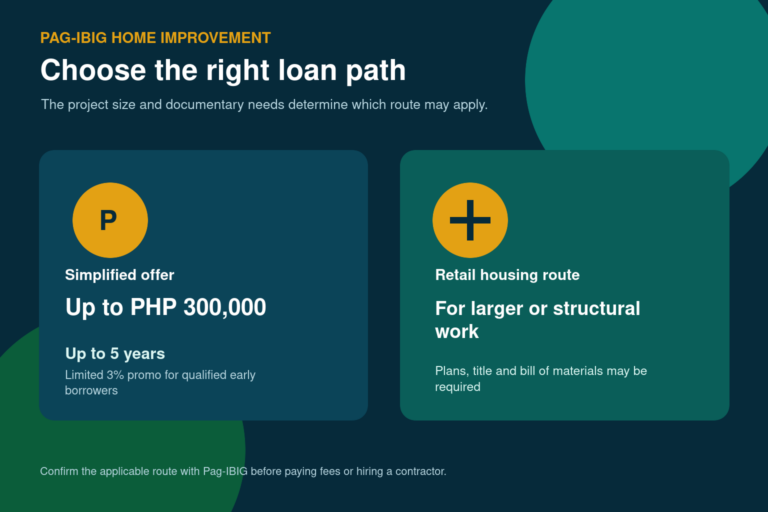
House construction or home improvement
Construction and improvement applications need technical records in addition to ownership and tax documents. These records help Pag-IBIG assess the work, cost and collateral.
- Title and updated tax records
- Building plans and specifications or detailed scope of work
- Bill of materials and cost estimates
- Required signatures of a licensed civil engineer or architect
- Building permit and related permits as applicable
- Vicinity map
Refinancing an existing housing loan
Refinancing requires evidence of the current debt in addition to the usual applicant and collateral records. Pag-IBIG needs to understand the outstanding obligation and payment performance.
- Existing loan, mortgage or promissory-note documents
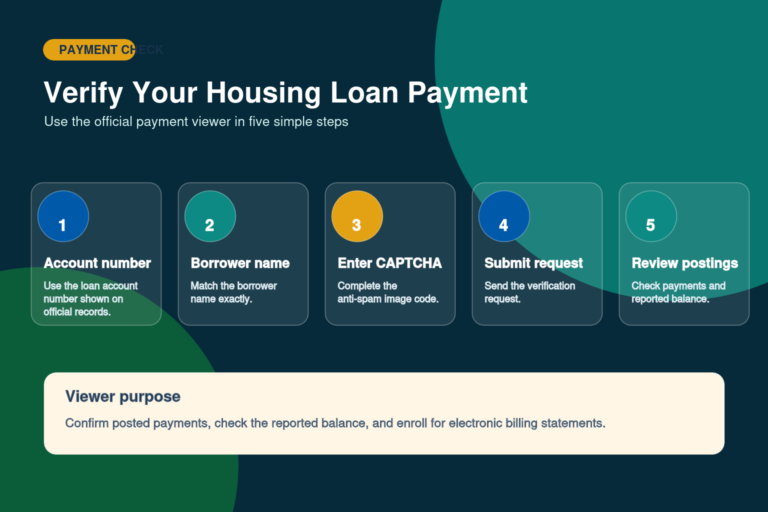
- Recent statement of account
- Payment history, receipts or loan ledger when required
- Title and tax records
- Plans and cost records if refinancing is combined with construction or improvement

Property Standards to Check Before You Pay a Reservation or Down Payment
Documents can be complete while the property itself still fails a technical or collateral review. Pag-IBIG’s retail purchase checklist includes minimum property conditions that applicants should discuss with the seller before committing money.
| Property issue | Checklist point | What to verify early |
|---|---|---|
| Lot size | The retail checklist states a minimum lot area of 28 square meters. | Compare the title, tax declaration, survey and actual boundaries. |
| Access road | The checklist states a minimum road right of way or access-road width of 1.5 meters. | Confirm that access is legally documented, not merely used by custom. |
| Frontage | The checklist states a minimum lot frontage of 3.5 meters. | Check technical descriptions and the property’s actual shape. |
| Condominium size | The checklist states a minimum unit size of 18 square meters unless covered by an applicable DHSUD Single Occupancy Permit. | Ask the developer or seller for the unit plan and permit basis. |
| Title condition | The property should be acceptable as collateral and free from unresolved liens or encumbrances that prevent the transaction. | Get a recent certified title copy and review annotations. |
| Taxes | Updated tax declarations and real property tax evidence are normally required. | Confirm arrears, penalties, ownership names and declared improvements. |
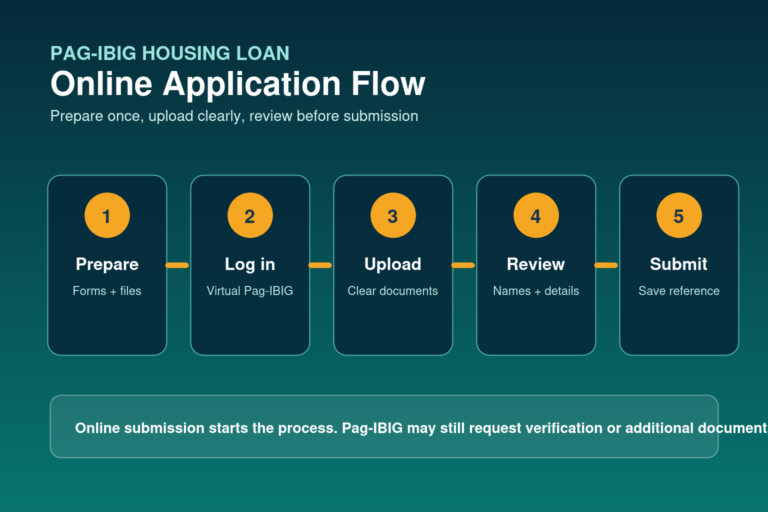
How to Prepare and Submit Your Requirements
A clean application package is easier to review than a thick but disorganized folder. Follow the sequence below before visiting a branch, working with a developer, or using an available online housing service.
Confirm your member details
Check your MID number, legal name, civil status, contact details and contribution record. Use Virtual Pag-IBIG where the required service is available, and resolve access issues through the Pag-IBIG login help page.
Choose the exact loan purpose
Decide whether the transaction is a private purchase, developer purchase, construction, improvement, refinancing or a permitted combination. This decision determines the property checklist.
Estimate a realistic amount
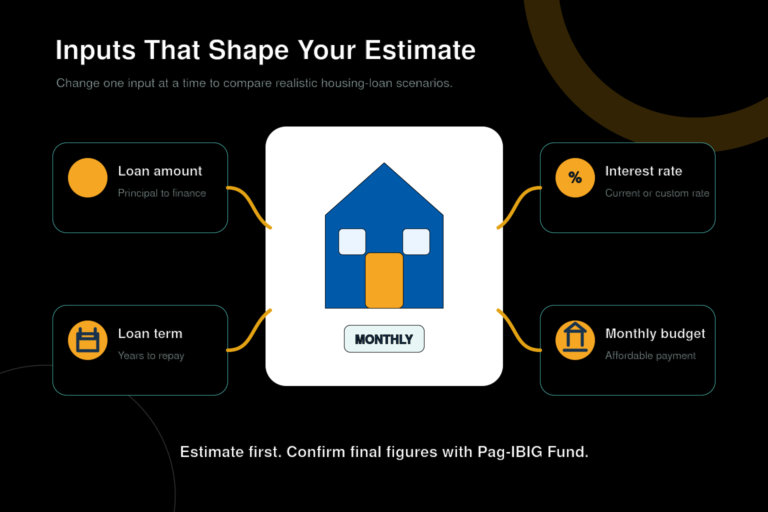
Use documented net income and current obligations, not the maximum amount you hope to receive. Compare possible terms in the housing loan calculator.
Complete the applicant forms
Prepare HLF068 and HLF069 when applicable. Check names, dates, addresses, signatures, declarations and the loan-purpose selection.
Build the income pack
Use the employed, self-employed or OFW list. Arrange documents by date and income source, and explain legitimate variations instead of leaving them unclear.
Collect property records
Request recent title and tax records. For construction or improvement, coordinate plans, permits and estimates with the appropriate licensed professional.
Compare copies with originals
Make clear, complete photocopies, including the back of IDs when required. Bring originals for authentication and do not crop title annotations, signatures or official seals.
Submit through the applicable channel
Follow the process for a branch, accredited developer or available Pag-IBIG online service. Keep a copy of everything submitted and record reference numbers and follow-up requests.
Common Reasons Requirements Are Returned or Delayed
Applicant-record problems
- Different names or birth dates across the application, ID and civil records
- Missing signatures, dates, declarations or co-borrower pages
- Expired, cropped or unreadable identification copies
- Using an old form when a newer version is required
- Representative documents that do not cover the requested action
Income-record problems
- Payslips that do not match the compensation certificate
- Declared business income without tax or operating records
- Unexplained bank deposits treated as regular income
- Missing English translations for overseas documents
- Requested amount that is not supported by documented capacity
Property-record problems
- Old title copy or unresolved annotations
- Seller’s name does not match the title or civil-status record
- Tax declaration does not show the existing improvement
- Unpaid real property taxes
- Boundary, access-road, frontage or technical-description issues
Transaction problems
- Using the retail checklist for a developer-assisted sale
- Construction estimates not signed by the proper professional
- Contract terms inconsistent with the requested loan purpose
- Refinancing records do not show the current balance and payment history
- Paying a seller before title and collateral issues are checked
Documents That May Be Required Before Loan Release
Initial application requirements are not the end of the process. After approval, Pag-IBIG can require final title, mortgage, tax, permit, insurance and completion documents before proceeds are released. The exact list depends on the transaction and conditions of approval.
Examples can include a title transferred to the required owner, a Registry of Deeds-certified title copy, updated tax records, registered mortgage documents, permits, an occupancy permit, proof of construction progress or other post-approval compliance records. Keep enough time and budget for notarization, registration, taxes, professional services and document retrieval.
Official Pag-IBIG Forms and Checklists
Use official Pag-IBIG files as the final authority. The links below point to the forms and purpose-specific checklists used to prepare this article.
| Official file | Best use |
|---|---|
| HLF068 Housing Loan Application | Principal borrower application |
| HLF069 Co-Borrower Application | Application for each co-borrower |
| HLF730 Retail Purchase Checklist | Purchase of a residential lot or unit from a private seller |
| HLF731 Construction or Home Improvement Checklist | House construction or home improvement |
| HLF727 Window 1 Checklist | Applicable developer-assisted transaction |
| HLF728 Window 2 Checklist | Applicable developer-assisted transaction |
| HLF733 Refinancing Checklist | Refinancing an existing housing loan |
| HLF735 Initial and Final Requirements | Post-approval and release-stage retail requirements |
Form filenames and version numbers can change. Start from the official Pag-IBIG Fund website when a direct file no longer opens.
Frequently Asked Questions
What are the basic Pag-IBIG housing loan requirements?
Most applicants need the correct housing loan application form, valid government-issued identification, proof of income, and property documents that match the loan purpose. Spouse, co-borrower, seller, developer, or representative documents may also be required when applicable.
Which application form should a principal borrower use?
The principal borrower generally uses Housing Loan Application form HLF068. A co-borrower uses HLF069. Use the latest form available from Pag-IBIG Fund and complete all applicable fields before signing.
How many valid IDs are required?
The official retail purchase checklist asks for a photocopy of one valid Philippine government-issued ID bearing the holder's signature for each applicable party. Bring the original ID for authentication when Pag-IBIG asks to compare it with the copy.
Can a self-employed member apply for a Pag-IBIG housing loan?
Yes. A self-employed applicant can apply, but the proof-of-income package is different from that of a salaried employee. It may include an income tax return, business registration records, financial statements, permits, bank records, commission statements, lease records, or other documents that establish a regular income source.
Is there a fixed minimum salary for a Pag-IBIG housing loan?
There is no single minimum salary that fits every housing loan application. Pag-IBIG evaluates documented income, repayment capacity, the requested amount, the loan term, existing obligations, and the property. Estimate affordability first, then prepare income records that support the amount you plan to borrow.
Are payslips enough for a locally employed applicant?
A recent certified payslip is commonly part of the employed applicant's package, but it may not be the only requirement. Pag-IBIG checklists may also call for a certificate of employment and compensation and the latest income tax return or BIR Form 2316.
Can I use a co-borrower?
A co-borrower may be included when allowed for the transaction. The co-borrower completes HLF069 and submits identification and income documents. Proof of relationship may be required, while non-relative co-borrowers may need an additional undertaking or supporting form.
Does my spouse need to submit documents?
Yes, when the applicant is married, the spouse is normally included in identity, civil-status, and consent-related documentation. The exact documents depend on the property title, marital property arrangement, loan structure, and whether the spouse is also a co-borrower.
What property documents are needed for a house-and-lot purchase?
Common property documents include the latest title, updated tax declaration, current real property tax receipt or clearance, contract to sell or deed-related documents, and a vicinity map. The seller's IDs and civil-status documents may also be needed.
Are the requirements different when buying from a developer?
Yes. Developer-assisted applications use a developer or window-specific checklist. The borrower still prepares the applicant documents, while the accredited developer supplies project, title, mortgage, and transaction records required under the applicable window.
What documents are needed to build a house?
Construction applications commonly require the applicant pack, title and tax documents, building plans, specifications or scope of work, a bill of materials and cost estimates signed by the appropriate licensed professional, permits, and a vicinity map. A separate construction article will cover this path in depth.
What documents are needed for home improvement?
Home improvement applications generally need the applicant and property records plus plans, a detailed scope of work, and cost estimates or a bill of materials. The final checklist depends on the scale and type of improvement.
What is required for refinancing?
Refinancing commonly requires the applicant pack, title and tax documents, the existing loan or mortgage records, a current statement of account, and payment-history evidence. Refinancing combined with construction or improvement has an expanded checklist.
Can someone submit the application for me?
A representative may be allowed when the appropriate authorization and representative information documents are provided. Pag-IBIG may require an Authority to Conduct Credit or Background Investigation and a special power of attorney, depending on the action and the applicant's location.
Do OFW documents need authentication or translation?
An overseas applicant may need a special power of attorney that meets Pag-IBIG's authentication rules. Documents issued in another language may need an English translation. Detailed OFW requirements will be addressed in the dedicated Housing Loan for OFWs article.
Why can Pag-IBIG ask for additional documents?
A checklist covers standard cases, but Pag-IBIG may request more documents to resolve name, signature, civil-status, income, title, boundary, tax, representation, or transaction discrepancies. Responding with complete and consistent records helps prevent repeated follow-ups.
Related Pag-IBIG Resources
Independent information notice
This website is an independent informational resource and is not Pag-IBIG Fund or a Philippine government website. Requirements can change and additional documents may be requested for a particular applicant or property. Confirm the latest checklist with Pag-IBIG Fund before submitting an application or paying a seller, developer or service provider.